Uncategorized
Can I Use Regular Scissors to Cut Hair? Risks, Damage & Better Alternatives
Feb
Can I Use Regular Scissors to Cut Hair?
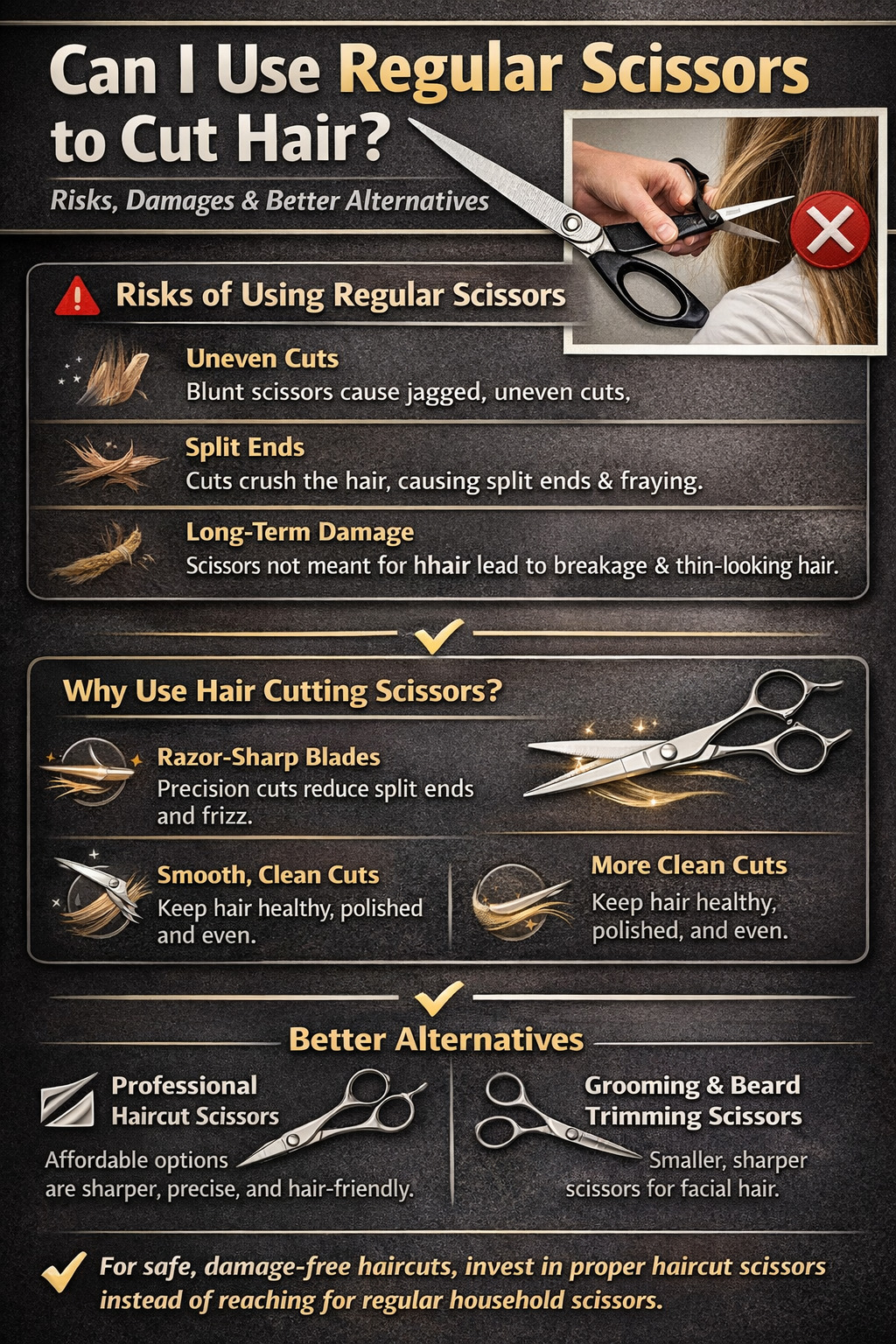
It’s a question many people ask before giving themselves or someone else a quick trim at home: can I use regular scissors to cut hair? While it may seem convenient to grab the nearest pair of household scissors, the short answer is yes, you can—but you really shouldn’t. Regular scissors are not designed for hair cutting, and using them can lead to uneven results, damaged hair, and long-term frustration. Let’s break down why this happens and what the better alternatives are.
How Regular Scissors Differ from Hair Cutting Scissors
At first glance, scissors may all look the same, but the design differences between regular scissors and professional hair cutting scissors are significant. Household scissors are typically made for cutting paper, fabric, or plastic. Their blades are thicker, the edges are not as finely sharpened, and the alignment is not optimized for soft, flexible hair strands.
Hair cutting scissors, on the other hand, are engineered specifically to slice through hair cleanly. They feature ultra-sharp blades, precise tension systems, and smooth edges that allow hair to be cut in one clean motion rather than crushed or bent. This design helps preserve the hair’s natural structure and ensures a polished finish.
Comparison table of some of the best haircut scissors
| Brand | Model / Line | Best For | Notes |
|---|---|---|---|
| Kamisori | DMZ‑2 Hair Cutting Shears | Professional Cutting | VG‑10 steel, 3D convex edge, ergonomic and long-lasting precision cuts |
| Hattori Hanzo | HH8 Talon Shears | Pro Barbers / Premium | Razor-sharp, top-tier scissors popular with professionals |
| Jaguar | Jay 2 / Diamond E | All-purpose Salon Use | German-made, ergonomic design, ideal for general cutting |
| Ninja | Rose Gold Dust Shears | Stylish Pro / Home Use | Japanese stainless steel with offset handle, sharp blades |
| Saki Shears | Katana Hair Shears | Precision Styling | Japanese 440C steel with hollow-ground blades for smooth cuts |
| Yaiba Koi | Japanese Barber Scissors | Barbers / Textured Styles | Balanced performance with micro-serrated blades |
What Happens When You Use Regular Scissors on Hair?
Using regular scissors to cut hair often results in uneven cuts and split ends. Because household scissors are not sharp enough, they tend to bend the hair before cutting it. This crushing action weakens the hair shaft and can cause fraying at the ends.
You may also notice that hair feels rough or looks jagged after being cut with regular scissors. Over time, this damage can travel up the hair shaft, making hair appear dull and unhealthy. For people with fine or curly hair, the problem is even more noticeable, as these hair types are more sensitive to blunt cutting tools.
Are Regular Scissors Ever Okay for Haircuts?
In emergency situations, regular scissors might work for very minor tasks, such as trimming a single loose strand or cutting bangs in a pinch. However, even then, the results are unlikely to be professional-looking. Regular scissors lack the control needed for precision, which is essential when shaping hair or blending layers.
For children’s haircuts or quick home trims, many people use regular scissors without realizing the long-term effects. While it may seem harmless at first, repeated use can contribute to increased breakage and uneven growth patterns.
Why Professionals Avoid Regular Scissors
Barbers and hairstylists invest in professional haircut scissors for a reason. These tools allow for accuracy, speed, and consistency. A clean cut reduces friction on the hair, which helps prevent split ends and maintains a healthier appearance.
Professional scissors are also ergonomically designed. They reduce hand strain and allow for controlled movements, which is crucial when cutting hair for extended periods. Using regular scissors can cause hand fatigue and lead to mistakes, especially for beginners.
Can Regular Scissors Damage Hair Permanently?
While hair will eventually grow back, damage caused by regular scissors can take months to correct. Split ends created by blunt scissors tend to worsen over time, requiring more frequent trims. In some cases, hair may appear thinner because damaged ends break off more easily.
If you’re trying to grow your hair longer, using regular scissors can slow progress. Healthy hair growth depends not just on the scalp but also on how the ends are maintained. Clean cuts help retain length, while rough cuts do the opposite.
Better Alternatives for Home Hair Cutting
If you plan to cut hair at home, investing in a pair of basic hair cutting scissors is one of the best decisions you can make. Entry-level professional scissors are affordable, widely available, and dramatically improve results compared to household scissors.
Look for scissors made from stainless steel with a sharp, smooth edge. Even beginner scissors are designed to cut hair cleanly and safely. Pair them with proper techniques, such as cutting small sections and working slowly, to achieve better outcomes.
For trimming beards or mustaches, specialized grooming scissors are also recommended. They offer better precision and reduce the risk of pulling or uneven cuts.
Safety Concerns When Using Regular Scissors
Regular scissors often have blunt tips and stiff handles, making them harder to control near the face or scalp. This increases the risk of accidental cuts or injuries, especially when cutting children’s hair.
Hair cutting scissors usually have smoother action and better balance, allowing for safer, more controlled movements. Safety is just as important as appearance when it comes to cutting hair.
Final Verdict: Should You Use Regular Scissors?
So, can you use regular scissors to cut hair? Technically yes—but it’s not a good idea. Regular scissors are not designed for the delicate structure of hair and can cause uneven cuts, split ends, and long-term damage. While they may work in a short-term emergency, they should never be a go-to solution.
If you care about how your hair looks and feels, using proper hair cutting scissors is the smarter choice. They deliver cleaner cuts, healthier hair, and better overall results—whether you’re trimming at home or aiming for a professional-level finish. Investing in the right tools not only saves time and frustration but also helps keep your hair looking its best. ✂️