
Tools Guides
How to Use an Olivia Garden Curly Hair Brush: A Simple Guide
Aug
How to Use an Olivia Garden Curly Hair Brush: A Simple Guide


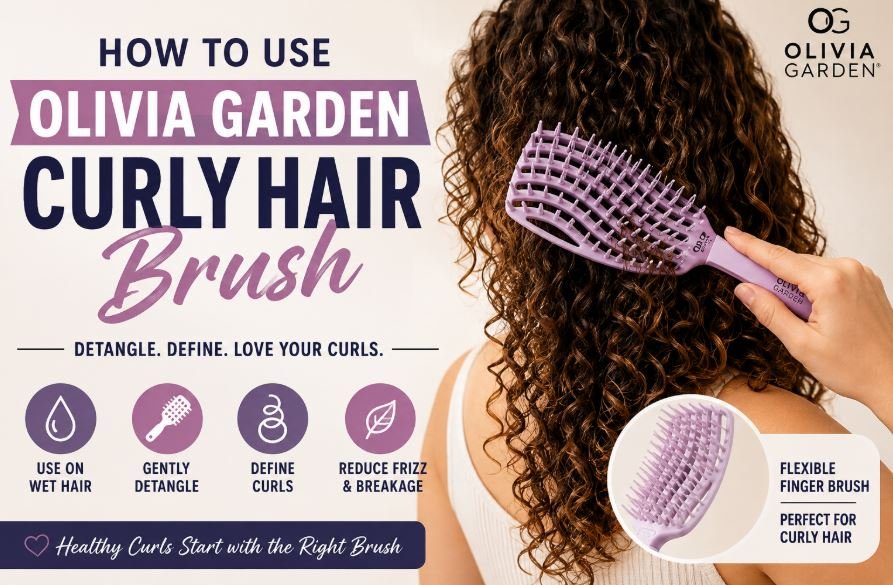
If you have curly hair, choosing the right brush can make a big difference. A good brush can help remove tangles, define curls, spread hair products, and reduce unnecessary pulling. An Olivia Garden curly hair brush can be used as part of a simple curly hair routine, especially when you want smoother and more defined curls.
Olivia Garden makes several brushes designed for different hair types and styling needs. Depending on the model you own, the brush may be used for detangling, distributing conditioner, defining curls, or styling wet hair.
This guide explains how to use an Olivia Garden brush on curly hair in simple steps.
1. Choose the Right Olivia Garden Brush
Before brushing your hair, check which Olivia Garden brush you have. Different models have different designs.
For curly hair, a flexible detangling brush can be useful because it can move through the hair more gently than a stiff traditional brush. Some Olivia Garden brushes have flexible bristles or a vented design that can make detangling easier.
Your hair type also matters. Wavy hair, curly hair, and coily hair can have different brushing needs.
If your curls are very tight or easily tangled, you should be especially gentle and avoid forcing the brush through knots.
2. Start With Wet or Damp Hair
Curly hair is usually easier to detangle when it is wet or damp.
Avoid aggressively brushing completely dry curls if your goal is to keep your natural curl pattern. Dry brushing can separate curl clumps and create frizz.
Start by wetting your hair in the shower or using a spray bottle to make it damp. Your hair does not necessarily need to be dripping wet, but it should have enough moisture to allow the brush to move smoothly.
3. Apply Conditioner
One of the easiest ways to use a curly hair brush is during the conditioning stage.
Apply a suitable hair conditioner from the middle of your hair toward the ends. If your hair is very dry or tangled, you can use a generous amount of conditioner.
Products containing ingredients designed to improve slip can make detangling easier. Slip means the hair feels smoother and the brush can move through it with less resistance.
This can help reduce pulling and breakage.
4. Divide Your Hair Into Sections
Do not try to brush your entire head at once.
Divide your hair into several sections. For thick or long curly hair, you may want to create four to eight sections.
Use your fingers to separate the hair gently.
Working with smaller sections gives you more control and makes it easier to find individual tangles.
It also helps ensure that conditioner is distributed evenly throughout the hair.
5. Start From the Ends
This is one of the most important steps.
Place the Olivia Garden brush near the ends of your hair and gently work through the tangled area.
Once the ends are easier to brush, gradually move higher toward the middle of the hair.
Finally, work closer to the roots.
Do not start at the roots and drag the brush all the way to the ends. If there is a large knot, this can pull the knot tighter and put unnecessary stress on your hair.
The ends of curly hair are often older and more fragile, so gentle handling is important.
6. Use Gentle Strokes
You do not need to brush curly hair quickly.
Use slow and gentle movements. If the brush gets stuck, stop and use your fingers to loosen the knot.
Never force the brush through a difficult tangle.
You can also add more conditioner or a leave-in conditioner if your hair needs additional moisture and slip.
The goal is to detangle the hair while using as little force as possible.
7. Brush in the Direction of Your Hair
Follow the natural direction of your curls and hair growth.
For many people with curly hair, gently brushing downward from the roots toward the ends works well when detangling wet hair. However, you can adjust the technique depending on your curl pattern and the brush design.
Some people also use a brush to create individual curl clumps.
After applying a curl cream or curl-defining gel, you can gently brush a small section and then allow the hair to form back into its natural curl shape.
8. Use the Brush for Curl Definition
An Olivia Garden brush can also be used for styling.
After washing your hair, apply your preferred curly hair products. Common products include:
- Leave-in conditioner
- Curl cream
- Curl mousse
- Curl gel
- Hair oil
Take a small section of wet or damp hair and apply your styling product.
Gently brush through the section. You can then twist, scrunch, or shape the section with your fingers.
Scrunching means gently squeezing the hair upward toward the scalp. This can encourage your natural curl pattern.
Allow your curls to air dry or use a diffuser attachment on a hair dryer.
9. Avoid Brushing Dry Curls Too Much
If you want defined curls, avoid repeatedly brushing your hair after it has dried.
Dry brushing can break apart curl clumps and make the hair look bigger and less defined. It can also increase the appearance of frizz.
If your curls need refreshing the next day, try using a small amount of water or a curl-refreshing product instead.
You can gently reshape the curls with your hands rather than brushing the entire head.
10. Clean Your Olivia Garden Brush
A hairbrush collects loose hair, conditioner, styling products, and natural oils over time.
Clean your brush regularly.
First, remove loose hair from the bristles. Then follow the cleaning instructions provided for your specific Olivia Garden brush.
Avoid soaking a brush if the manufacturer says it should not be submerged. Different brush materials and constructions may require different cleaning methods.
Keeping the brush clean can also make your hair-care routine more hygienic.
Olivia Garden Brush for Different Curl Types
The best technique depends on your hair.
Wavy hair: Use gentle brushing on damp hair and avoid excessive brushing after styling.
Curly hair: Detangle with conditioner and use the brush to help create smooth curl clumps.
Coily hair: Work in smaller sections and use plenty of moisture and conditioner. Finger detangling before brushing can also be helpful.
Thick hair: Divide the hair into more sections so you can work through each section carefully.
Common Mistakes to Avoid
One common mistake is brushing curly hair aggressively. Curly hair can be more prone to dryness and breakage, so gentle handling is important.
Another mistake is brushing from the roots downward when the ends are heavily tangled. Start at the ends and work upward instead.
Using too little conditioner can also make detangling difficult.
Finally, avoid assuming that every Olivia Garden brush should be used in exactly the same way. Olivia Garden produces multiple brush types, so always consider the specific model and its manufacturer instructions.
A professional barber cape is another important part of a salon or barber routine. While an Olivia Garden curly hair brush helps with detangling and styling hair, a barber cape protects the client’s clothing from loose hair, water, and hair products during grooming. A quality barber cape should be comfortable, lightweight, and easy to clean. If you are looking for a professional option, explore our barber capes designed for barbers, salons, and hair professionals.
Final Thoughts
Using an Olivia Garden curly hair brush can be a simple part of your curly hair routine. For most curly hair, the key is moisture, patience, and gentle handling.
Start with damp or wet hair, apply conditioner, divide your hair into sections, and begin brushing from the ends. Work slowly toward the roots and never force the brush through difficult knots.
For styling, you can use the brush with products such as curl cream, mousse, or gel to help create smoother curl clumps. Once your hair is styled, allow the curls to dry naturally or use a diffuser.
With the right technique, an Olivia Garden brush can help make detangling and curl styling easier while helping you maintain your natural curl pattern.